
A LOVE LETTER TO THE WHYTE MUSEUM IN BANFF
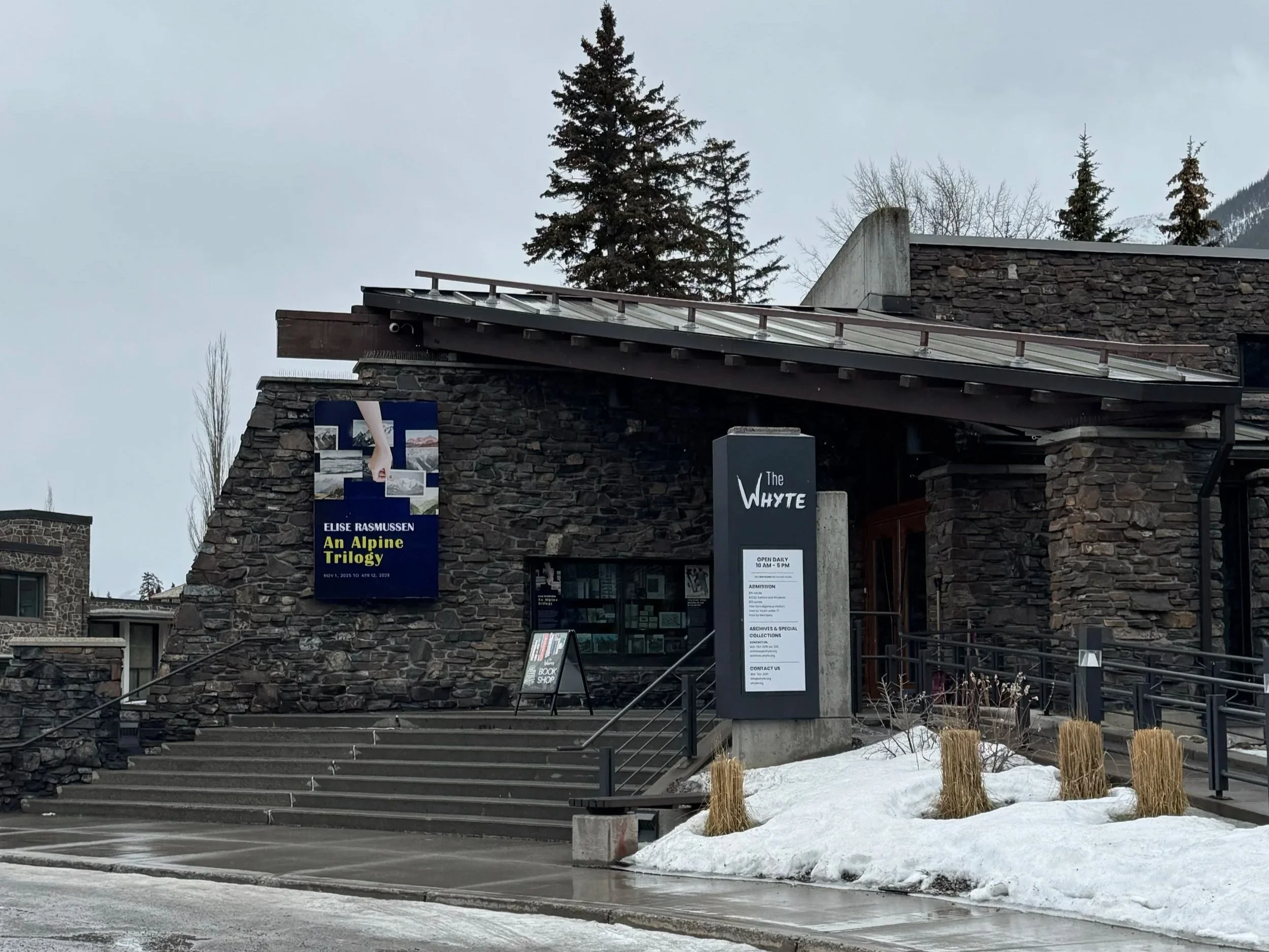
In late winter, I often go home to Calgary and usually end up in Banff. And along with fondue, the Whyte Museum of the Canadian Rockies is always a highlight. A magical place you can’t help but leave with a deeper appreciation, both for the museum itself and where it sits.
Every exhibition, whether rotating or permanent, feels considered. Even the gift shop feels like an extension of the work rather than an afterthought.
It feels like a love letter to the land and the people who have shaped Banff, while still making space for what’s happening now. That balance is rare.
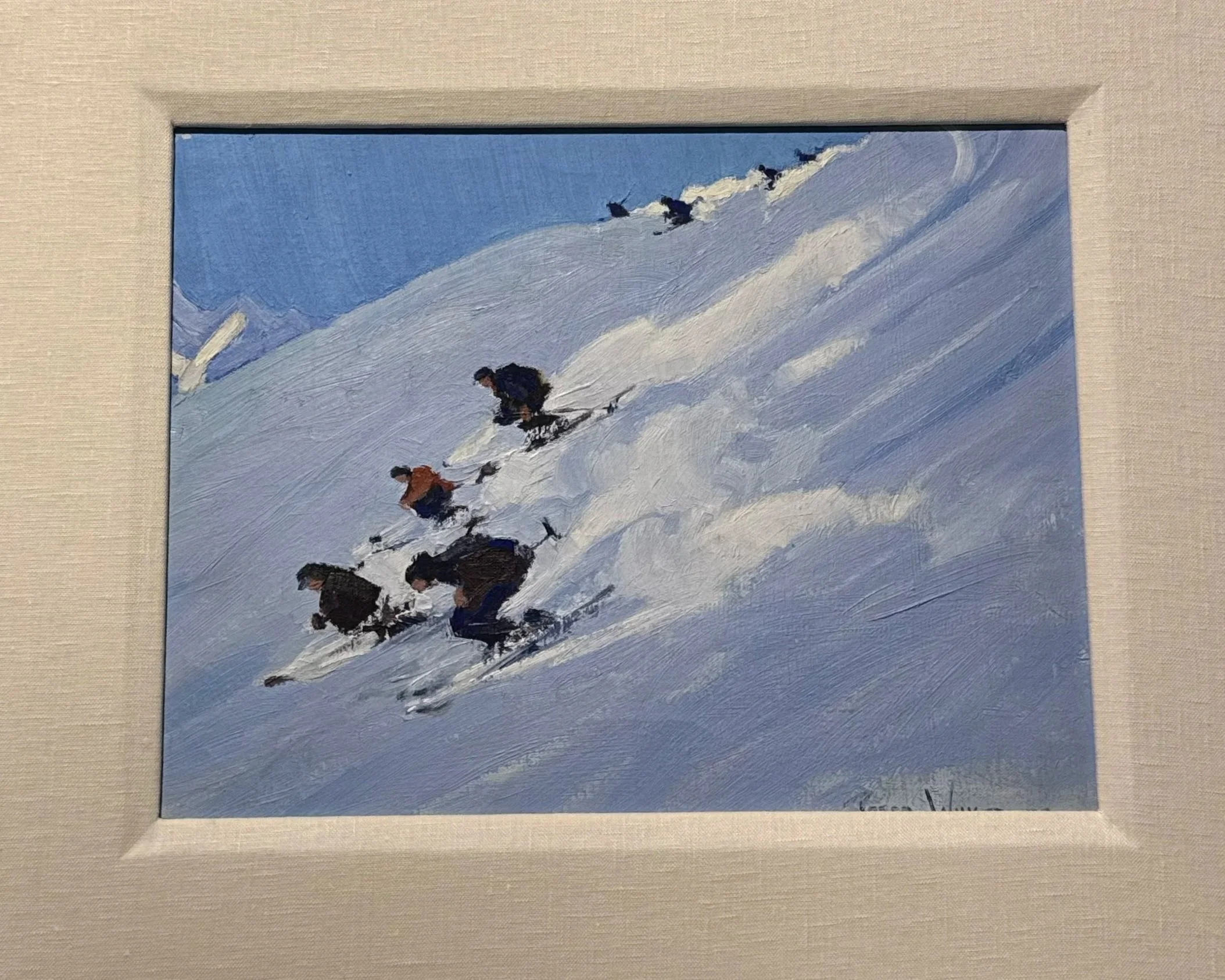
One of the things I keep coming back to is their photographic archive. It’s made up of donated work from both professional and independent photographers, a collective record from people who were simply there, documenting Banff as it was becoming what it is today.
I could spend hours in it. Honestly, days.
Seeing a place through so many different eyes, across time, you begin to understand why Banff is such a special place.
The collection is proof that photography is a thread, weaving connection and community across race, time, and lived experience.
The Colour of Where You Are Not
The main exhibition running from November 1st to April 12th, 2026, is Elise Rasmussen’s An Alpine Trilogy, a body of work exploring perception, language, and how we understand and use something as simple as colour, grounded in the Alpine landscape and echoed in the surrounding peaks of Banff.
I keep coming back to it: “Did you know blue didn’t have a name?”
The idea that blue didn’t always have a name. Blue only entered language once it could be made into pigment, something tangible, something that could be held, used, most significantly, sold.
And yet, the sky is blue. The water is blue.
It made me think about how much of what we see exists before we have the language to describe it. The sky has always been what it is, but at some point, we decided to call it blue.
What I found most interesting was how Rasmussen tied in not just what blue is, but what it means.
“Blue is the colour of where you’re not.”
That sense of distance. Of longing. Of something just out of reach.
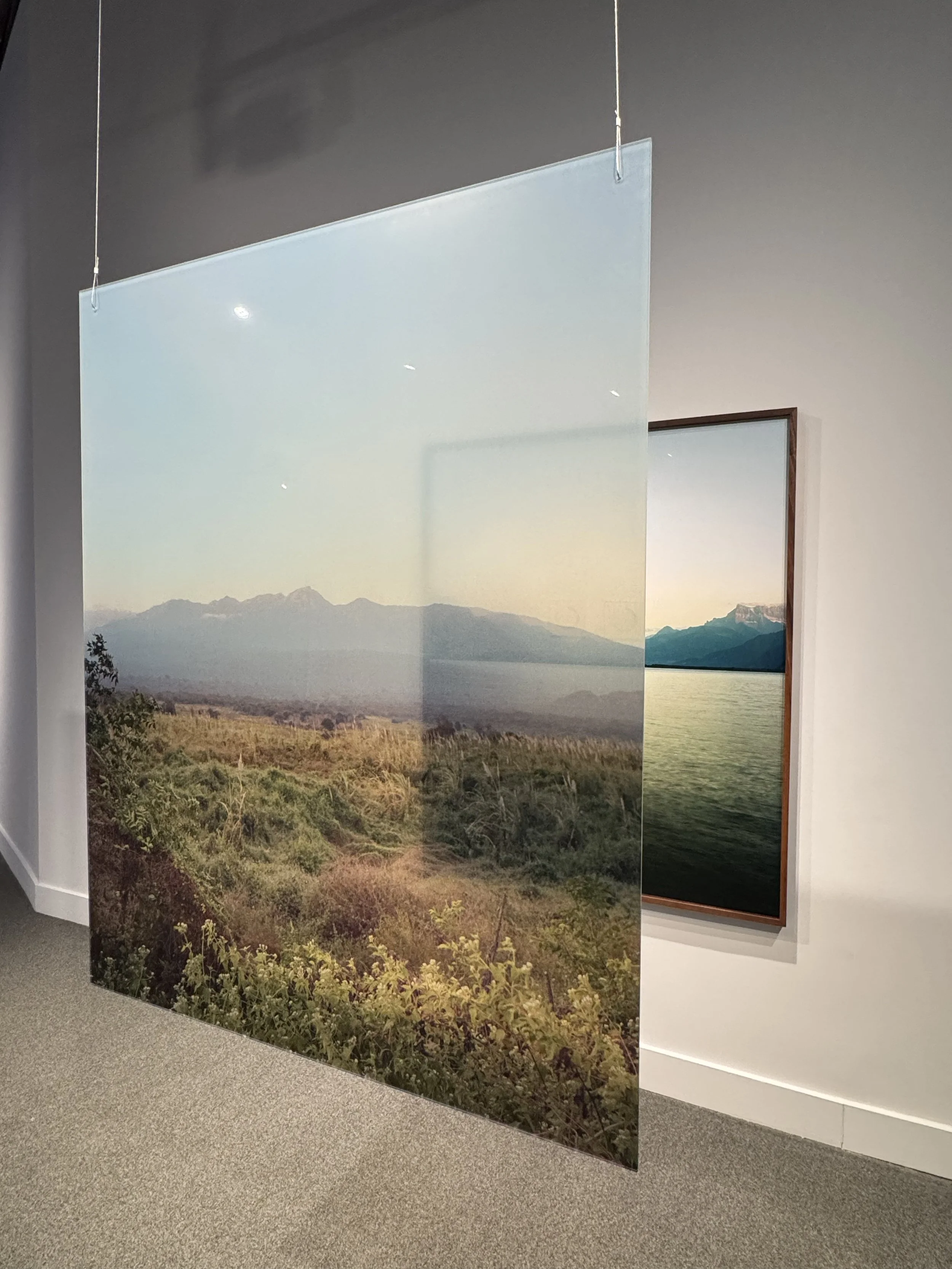
And then the mountains.
How something so solid, so physical, appears blue when it’s far away. Not because it is blue, but because of everything between you and it. The atmosphere. The distance. The space.
Driving home, I kept thinking about the idea of measuring blue, that someone set out to understand whether things like elevation could change the shade of the sky.
I found myself watching the sky shift, noticing the gradients, something I don’t think I would have paid attention to before.
Blue holds so many meanings, it can’t be pinned down, not even by Horace-Bénédict de Saussure’s cyanometer.
